

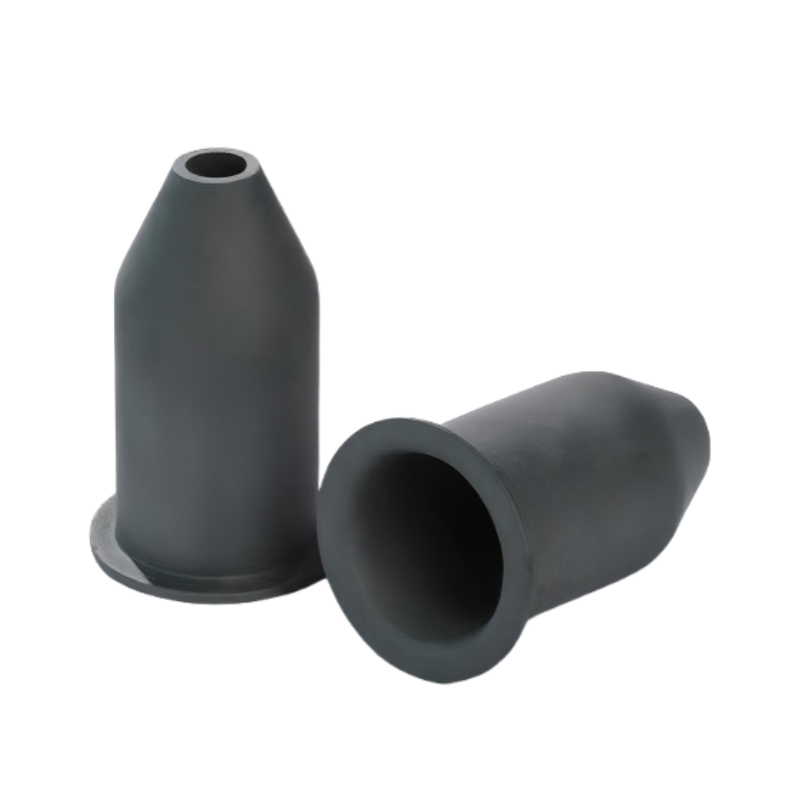
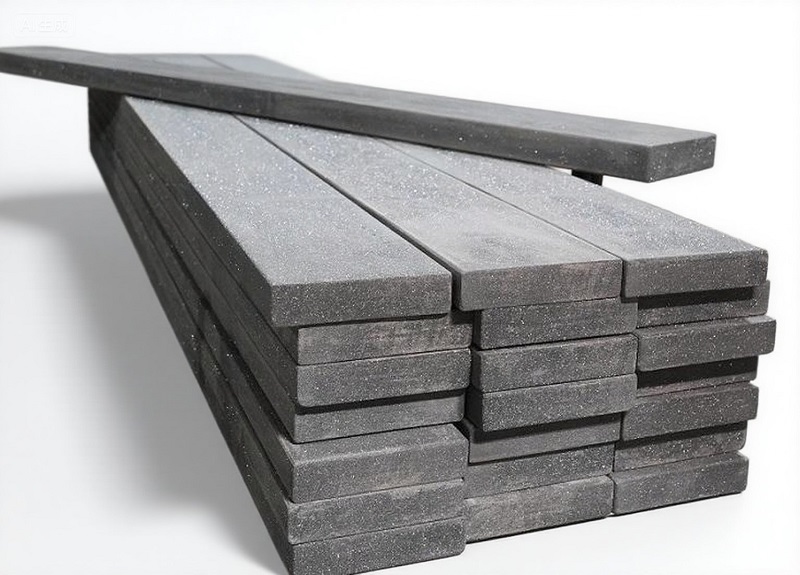
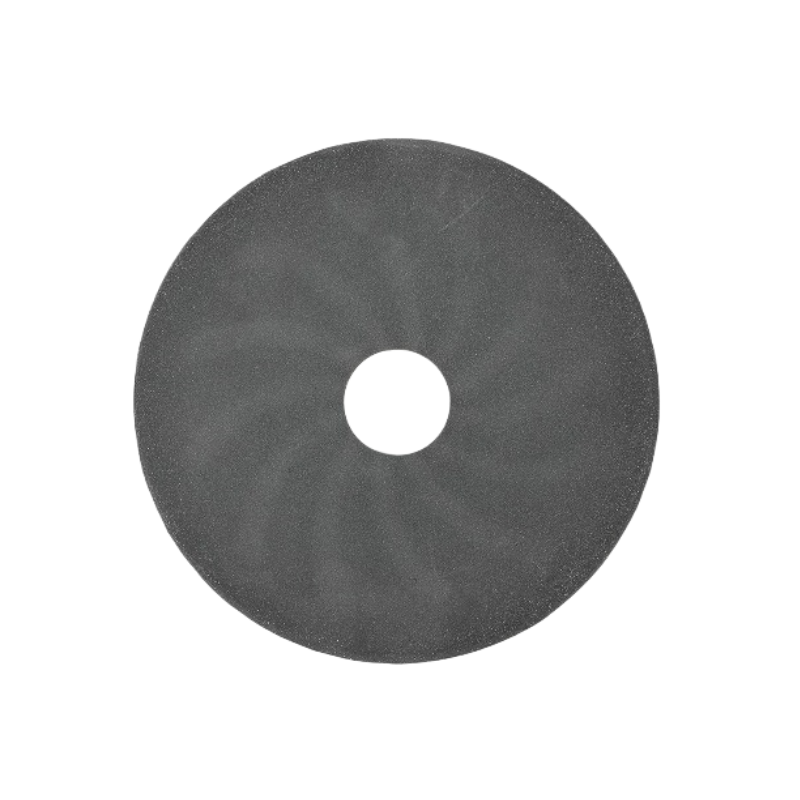
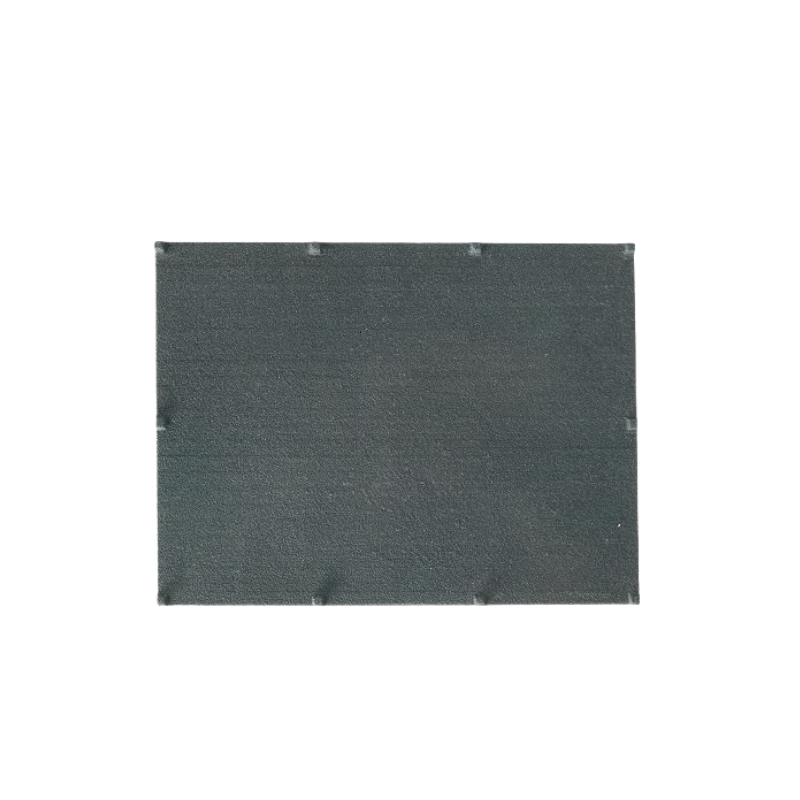
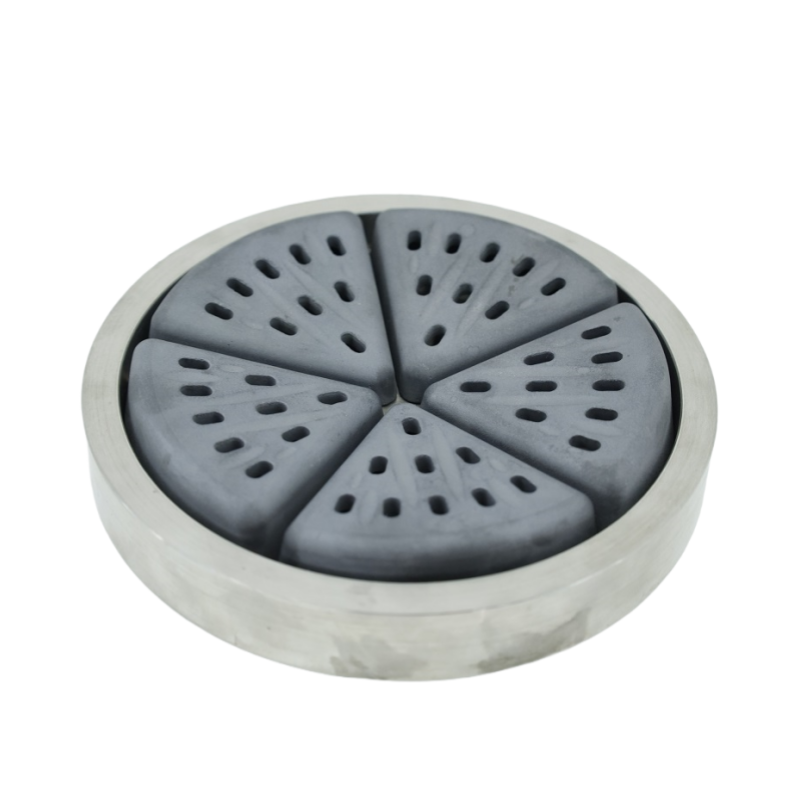
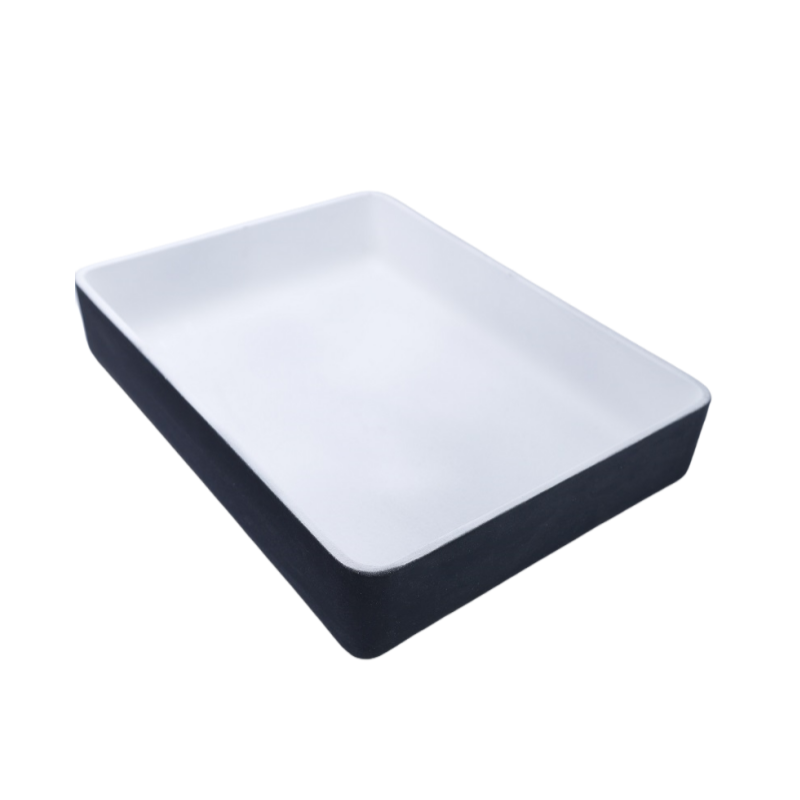
In modern heat treatment processes for advanced ceramics, lithium battery materials, or powder metallurgy, the demands on sintering supports are exceptionally stringent. They must not only withstand the intense heat exceeding 1500°C but also maintain dimensional stability under brutal thermal cycling of rapid heating and cooling. Even the slightest deformation can lead to the rejection of an entire furnace batch. Today, we take an in-depth look at a custom-designed recrystallized silicon carbide (RSiC) sintering plate with a multi-hole structure—a solution born to address such critical challenges, showcasing the perfect integration of materials science and precision engineering.
Project Background: The Client's Core Challenges
Our client, a manufacturer of high-performance technical ceramics, faced severe challenges in their sintering process:
Frequent Thermal Shock: The process required rapid heating and cooling, pushing the thermal shock resistance of the support frames to their limits.
High Load-Bearing Demand: The need to carry numerous crucibles mandated that the sintering supports possess extremely high high-temperature strength and rigidity.
Zero Tolerance for Deformation: Any high-temperature warping or distortion of the supports would cause the crucibles above to tilt, leading to product issues like color variation, deformation, or even sticking, resulting in significant economic losses.
The Solution: A Tailored Recrystallized Silicon Carbide Sintering Plate
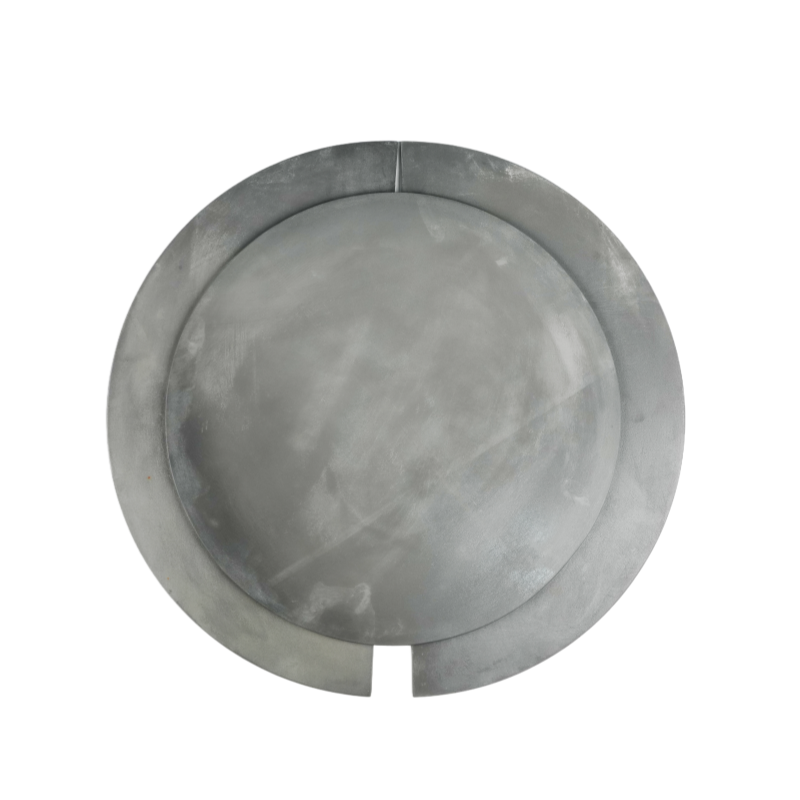
To address these pain points, we recommended and manufactured this recrystallized silicon carbide sintering plate with a multi-hole structure. It is far more than a simple support; it is a systems engineering component integrating advanced materials and precision design.
1. Core Material: Recrystallized Silicon Carbide – The King of Thermal Shock Resistance
The base material we selected is not ordinary ceramic, but Recrystallized Silicon Carbide (RSiC). This material, thanks to its unique manufacturing process—pure solid-state sintering via silicon evaporation and condensation at ultra-high temperatures without any metallic sintering aids—possesses unparalleled characteristics:
Ultimate Thermal Shock Resistance: Can easily withstand rapid quenching from 1600°C to room temperature without cracking, perfectly matching the client's rapid thermal cycling process.
Ultra-High Purity and Stability: Free from secondary phases, ensuring no contamination of products at high temperatures, and exhibits minimal creep, undergoing almost no deformation under long-term high-temperature load.
Excellent High-Temperature Load Capacity: Maintains extremely high strength even above 1650°C, providing stable support for sintered products.
2. Ingenious Structural Design: Multi-Hole Structure and Reinforced Edges
The design of this component is key to its success:
Multi-Hole Structure: The main body features multiple precisely calculated round holes. These apertures are not merely for weight reduction; their primary functions are:
Promoting Thermal Convection: Allowing hot air to pass through efficiently and uniformly during heating and cooling cycles, reducing temperature gradients and thermal stress within the furnace, and ensuring uniform product heating.
Optimizing Weight: Achieving lightweighting while ensuring structural strength, reducing equipment load and saving energy.
Prominent Shaped Edges: The edges of the component are not simple straight lines but are designed with protruding features specifically for positioning and support. These "locking edges" serve to:
Precisely Position Crucibles: Ensure each crucible is securely held in its preset location, preventing displacement due to vibration or airflow impact.
Disperse Stress: Evenly distribute the weight of the crucibles across the entire support structure via reinforcing ribs and protruding edges, avoiding localized stress concentration.
3. Precision Machining Technology: From "Blank" to "Precision Component"
The final accuracy of a well-designed component depends on machining capability. As a complex-shaped part, the machining difficulty for contours, hole positions, and edges of this sintering support is far greater than for standard square or circular products.
We employ advanced CNC grinding machines, diamond tools, and laser processing for precision machining.
This ensures the exact size and positional accuracy of every round hole.
It guarantees that every supporting protruding edge has sharp, well-defined corners and precise dimensions, achieving perfect fit with the crucibles.
This capability for precision machining of complex shapes directly determines the component's performance and service life.
Conclusion
This case fully demonstrates that in modern industry, an excellent refractory component cannot simply "withstand heat." It is the crystalized integration of premium material (Recrystallized SiC), innovative structural design, and cutting-edge precision machining technology. It is through such "precision backbones" that we provide the most solid support for our clients' core processes, jointly upholding the future of advanced manufacturing.
