

In the world of silicon carbide materials, particles may be small, but they play a decisive role akin to "genes." Different particle characteristics directly correspond to different performance outcomes. The following table clearly illustrates these relationships:
| Performance Metric | Influence of Particle Characteristics | One-Sentence Summary |
|---|---|---|
| Hardness / Wear Resistance | Finer and denser particles give higher hardness; fewer impurities give better wear resistance | Fine particles are like "hardened steel," coarse particles like "cast iron" — fine particles are better for tough battles |
| Strength | Reasonable particle size distribution, regular morphology, and high purity yield higher strength | Good particles are like good bricks — the wall they build is naturally strong |
| Thermal Shock Resistance | Coarse particles and flaky particles enhance thermal shock resistance | Coarse particles act as "cushions," flaky particles as "crack preventers" — together they resist impact |
| Thermal Conductivity | High purity, low oxygen content, and good grain boundary bonding result in better thermal conductivity | Impurities and glass phases are "thermal barriers" — the less, the smoother the flow |
| Sintering Activity | Fine particles with high specific surface area sinter more easily, allowing lower temperatures | Fine particles have "high activity" — like water that boils with a small flame |
| Corrosion Resistance | High density, few impurities, and minimal glass phase improve corrosion resistance | Denser, purer, and with less glass phase — the harder it is for corrosive media to invade |
Practical Particle Selection Guide: Application Scenarios Determine Formulation
Different industrial scenarios place vastly different demands on silicon carbide materials. Here is a particle selection guide for typical applications:
| Application Scenario | Recommended Particle Characteristics | Why This Choice? |
|---|---|---|
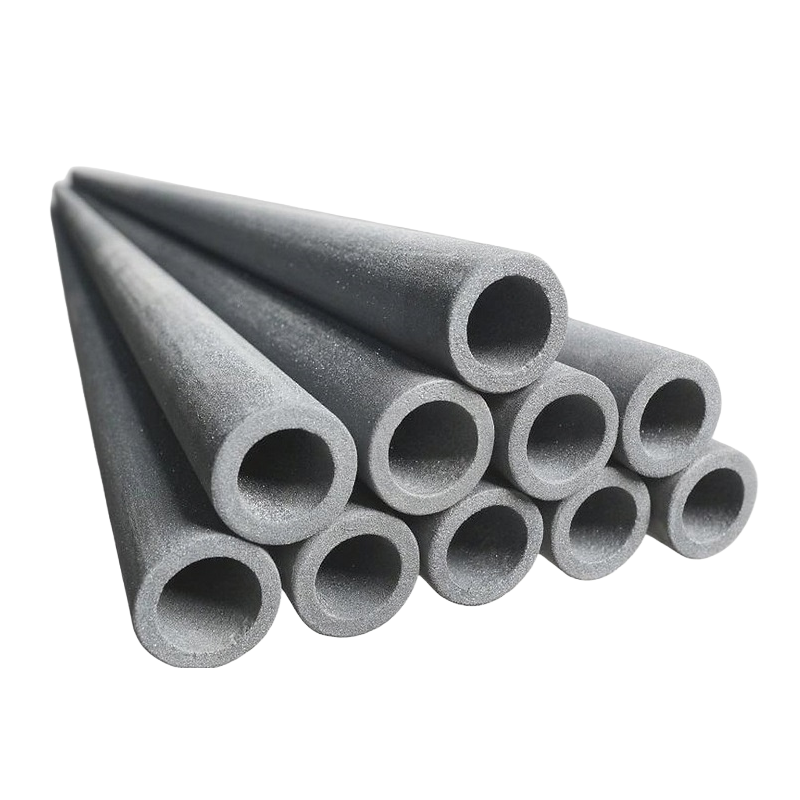
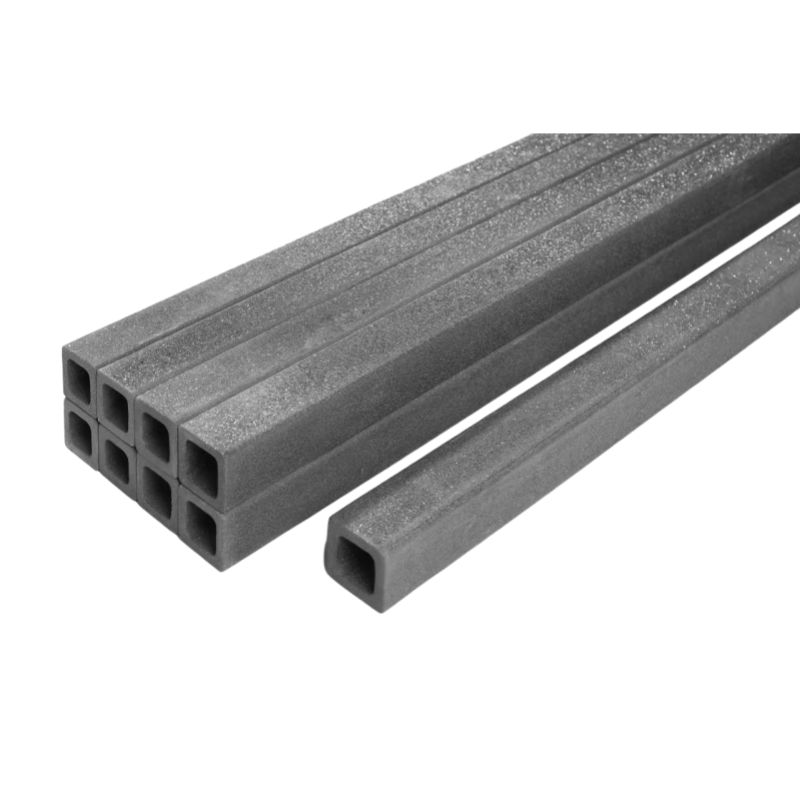
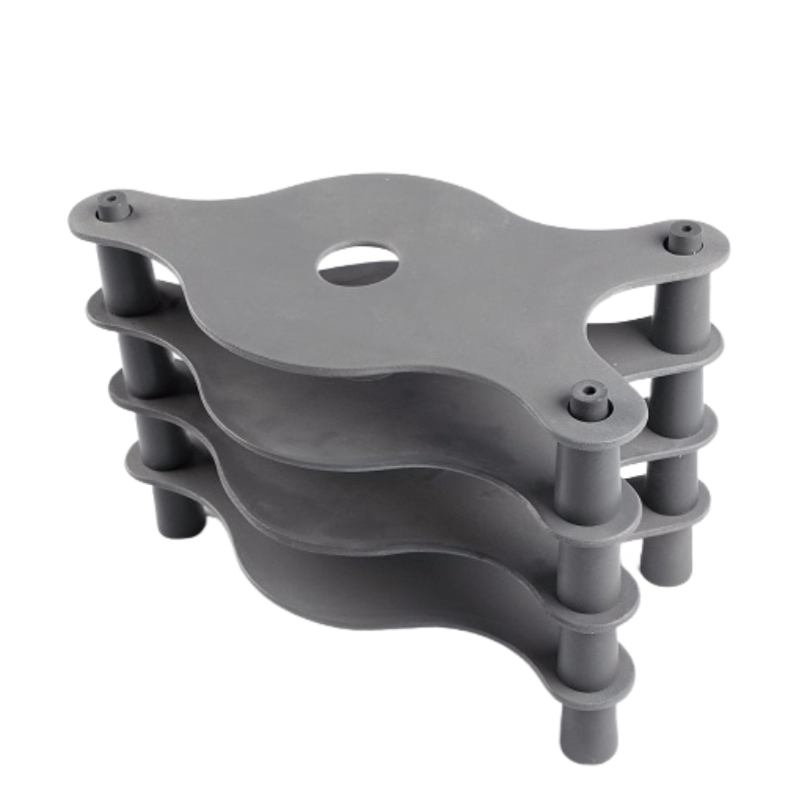
| Recrystallized Silicon Carbide Kiln Furniture | Predominantly coarse particles, multi-modal gradation, moderate purity, prioritizing thermal shock resistance | Kiln furniture frequently experiences heating and cooling cycles; coarse particles effectively buffer thermal stress and prevent cracking |
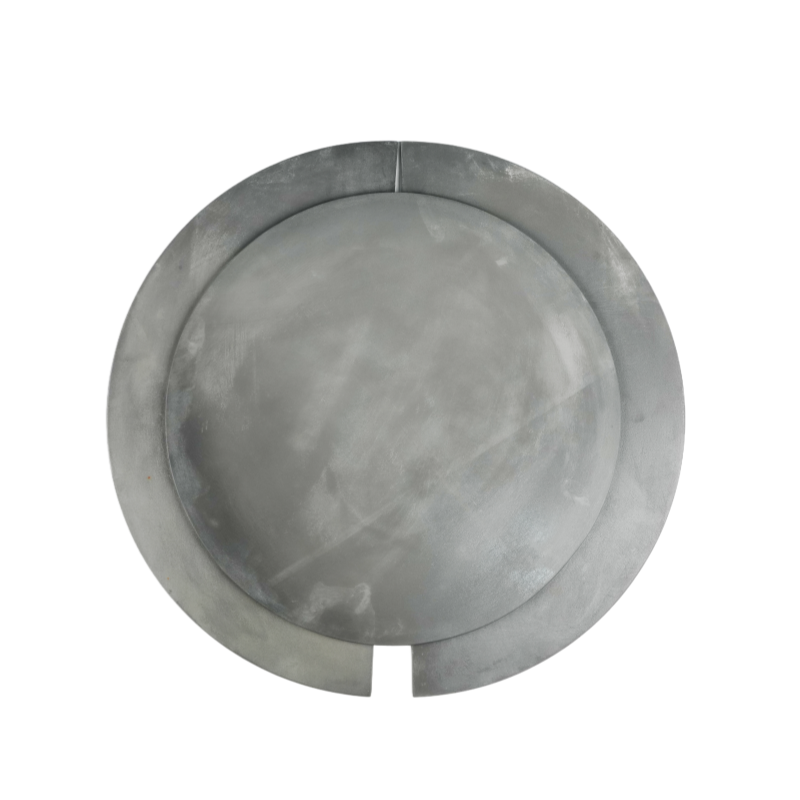
| Reaction-Bonded Silicon Carbide Sealing Rings | Fine particles + carbon source, narrow distribution, high density, high strength | Sealing rings require extremely high density and strength; fine particles combined with a carbon source enable reaction sintering with near-zero porosity |
| Pressureless Sintered Silicon Carbide Components | Submicron particles, high purity, narrow distribution, high sintering activity | Pressureless sintering relies on particles "bonding" with each other; fine particles with high activity sinter more easily |
| Silicon Carbide Coatings / Spraying | Spherical particles, good flowability, uniform particle size | Spherical particles act like "ball bearings," spreading evenly during spraying, resulting in a smoother, denser coating |
| Semiconductor Components | Nano to submicron particles, ultra-high purity (>99.9995%), strict impurity control | Semiconductor processes have zero tolerance for impurities — a single impurity can ruin an entire wafer |
Case Studies: Same Particle, Different Outcomes
To better understand the importance of particle characteristics, let's look at two comparative cases:
Case Study 1: The "Battle of Longevity" for Sealing Rings
Scenario: A mechanical seal ring for a chemical plant pump, working with a strongly acidic liquid at 3000 r/min.
| Comparison | Standard SiC Seal Ring | Optimized Particle Formulation Seal Ring |
|---|---|---|
| Particle Characteristics | Wide particle size distribution, moderate purity (98.5%) | Predominantly fine particles, narrow distribution, 99.9% purity |
| Density | Porosity ~3% | Porosity <0.5% |
| Service Life | Approximately 6 months | Approximately 24 months |
| Failure Mode | Media penetrated pores, causing corrosion + wear | Still operating normally |
Conclusion: Optimizing particle purity and distribution extended the sealing ring's lifespan by 4 times.
Case Study 2: The "Thermal Shock" Showdown for Kiln Furniture
Scenario: An electronic ceramic sintering kiln experiencing 2 heating/cooling cycles per day (room temperature → 1600°C → room temperature).
| Comparison | Kiln Furniture with Predominantly Fine Particles | Kiln Furniture with Coarse + Flaky Particle Gradation |
|---|---|---|
| Particle Characteristics | Mostly fine particles, single gradation | Predominantly coarse particles with flaky particles added |
| Thermal Shock Resistance | Cracks appeared after ~30 cycles | No cracks after >150 cycles |
| Service Life | Approximately 2 months | Approximately 10 months |
| Failure Mode | Cracking due to concentrated thermal stress | Still operating normally |
Conclusion: Proper particle gradation and morphology selection extended kiln furniture lifespan by 5 times.
Technical Pathways for Particle Control: From "Knowing" to "Doing"
Understanding the importance of particle characteristics is one thing; achieving precise control is another. Here are several key technical pathways:
| Control Dimension | Technical Methods | Achieved Effect |
|---|---|---|
| Particle Size Control | Jet milling, classifiers, sedimentation separation | Achieve target particle size distribution, precise down to D50 = 0.5μm |
| Morphology Control | Crushing process optimization, spheroidization treatment | Obtain blocky, flaky, or spherical particles |
| Purity Enhancement | Acid washing, flotation, high-temperature chlorination | Increase purity from 98% to above 99.9995% |
| Gradation Design | Multi-component mixing, simulation optimization | Achieve maximum packing density, improve material properties |
| Surface Modification | Coupling agent treatment, oxidation treatment | Improve compatibility between particles and binding phases |
Industry Trends: Particle Technology Moving Toward "Precision"
As high-end manufacturing demands ever-increasing material performance, silicon carbide particle technology continues to evolve:
| Trend Direction | Technical Implication | Typical Applications |
|---|---|---|
| Nanoscale | Particle sizes extending toward submicron and nano scales | Pressureless sintered ceramics, semiconductor components |
| Ultra-High Purity | Purity requirements moving from 99% to 99.9995%+ | Semiconductors, optical devices |
| Customization | Designing customized particle formulations for specific applications | Aerospace, biomedical |
| Spheroidization | Spherical particles for new processes like 3D printing and spraying | Additive manufacturing, thermal spraying |
| Hybridization/Composite | Particle surface coating or doping with other elements | Functionally graded materials, conductive ceramics |
Conclusion: Small Particles, Infinite Potential
Silicon carbide particles — seemingly insignificant powders — are the "first checkpoint" in determining material performance. From particle size distribution to morphology, from purity control to gradation design, each parameter is like a precise "formula" requiring repeated tuning and optimization by researchers.
It is precisely this fine-scale control that allows silicon carbide materials to adapt to countless industrial scenarios:
The Blazing Heat of Metallurgical Furnaces: Coarse particles provide thermal shock resistance, withstanding frequent heating and cooling cycles
The Precision Processes of Semiconductor Equipment: Ultra-high-purity particles eliminate any risk of impurity contamination
The Enduring Protection of Wear-Resistant Components: Fine particles + high density resist long-term wear and erosion
The High-Temperature Challenges of Aerospace: Optimized particle formulations ensure stable service under extreme conditions
Small particles, infinite potential. Understanding particles is the beginning of understanding silicon carbide materials.
If you are facing challenges in selecting or optimizing silicon carbide materials for your applications, please contact us — let's start with the particles and tailor a solution for you.
[Contact us to Inquire or Order] or [Call Our Hotline].
Phone:(86)18642501777
E-Mail: info@riseportglobal.com
Whatsapp:(852)84343647
