

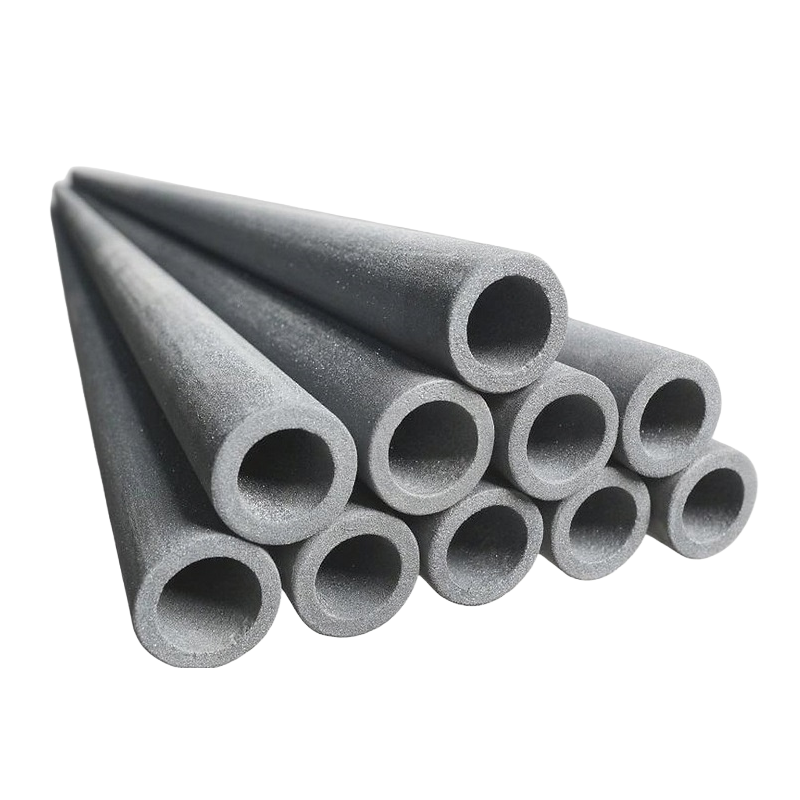
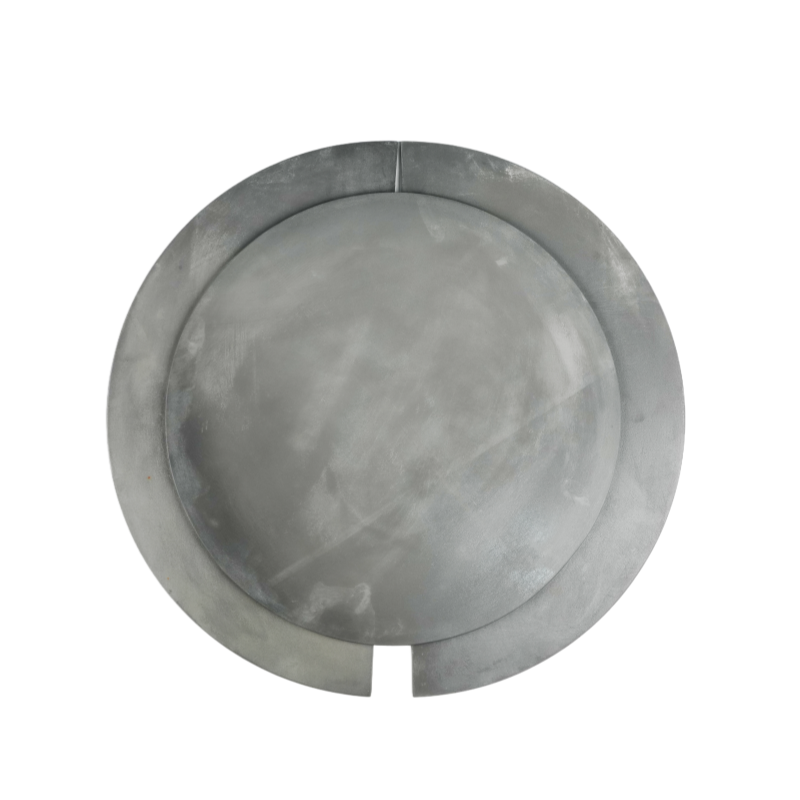
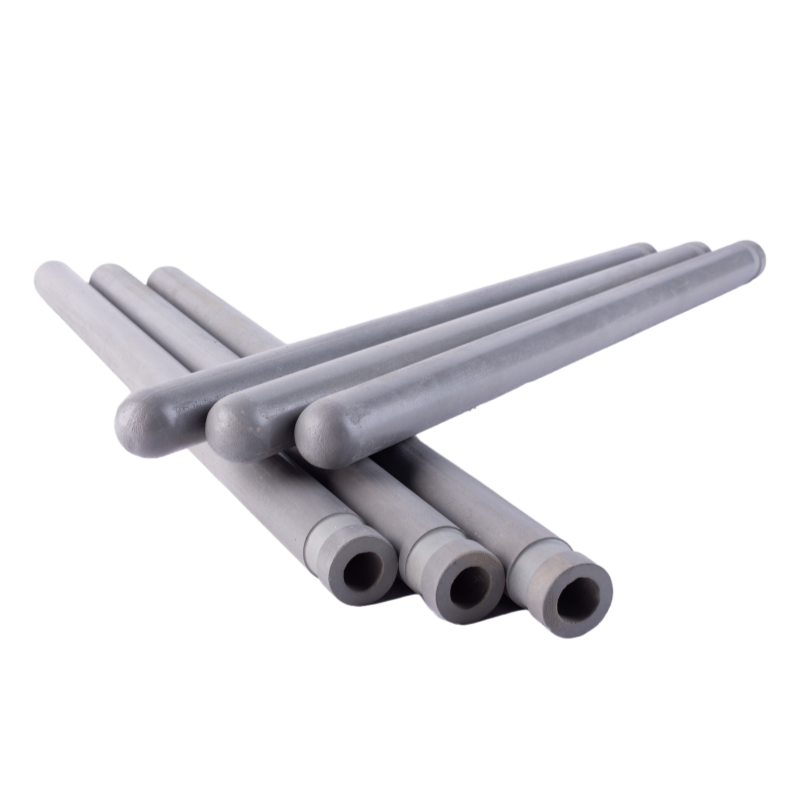
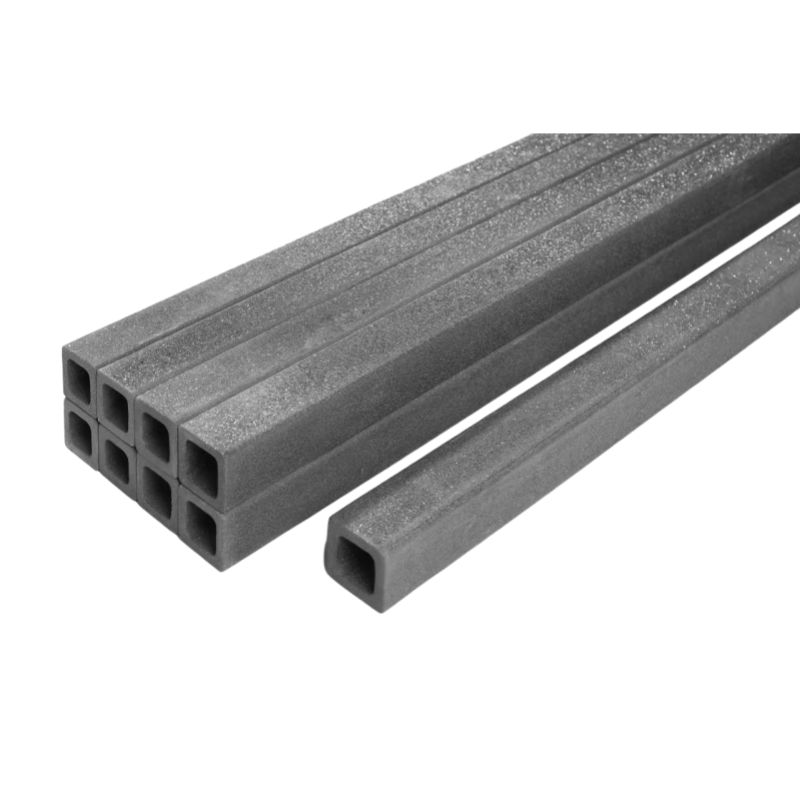
In high-temperature industrial and advanced material sintering fields, the core component of kilns—kiln rollers—directly determines process limits, energy consumption, and product quality. When temperatures soar above 1500°C, ordinary materials struggle to cope. One special advanced ceramic material stands out for its exceptional performance: Recrystallized Silicon Carbide (RSiC) rollers.
This article explores, from a materials science and application perspective, how RSiC rollers have become the reliable "skeleton" in extreme high-temperature environments.
What is Recrystallized Silicon Carbide?
Recrystallized Silicon Carbide (RSiC) is a special type of SiC produced through a unique high-temperature sintering process (typically above 2200°C). Without pressure or sintering aids, high-purity SiC fine powder undergoes evaporation-condensation mass transfer at grain contact points, achieving direct and strong bonding between grains.
Its core characteristics can be summarized as "high purity, porous, direct grain bonding":
Ultra-high Purity: SiC content is usually >99%, with virtually no metallic impurities or glass phases.
Unique Porous Structure: Volume does not shrink during sintering, resulting in approximately 10%-20% interconnected open pores.
Strong Intergranular Bonding: Grains are directly connected via strong covalent bonds, giving the material an extremely high strength retention rate at elevated temperatures.
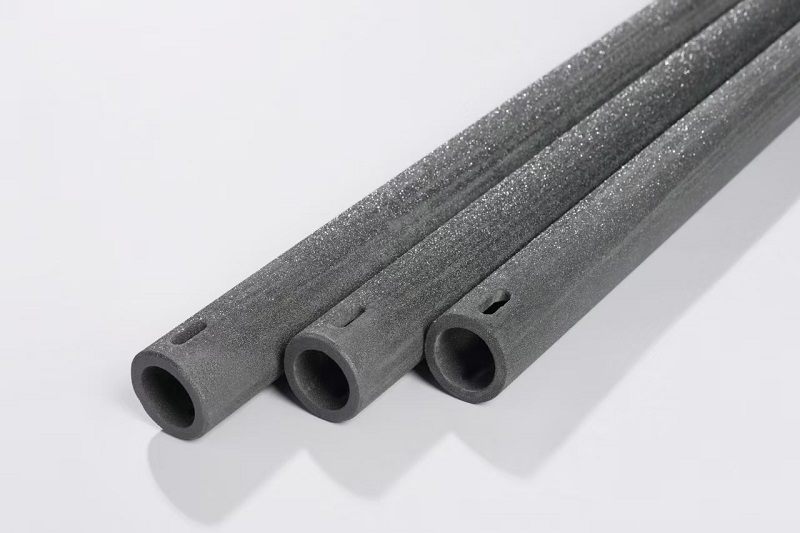 Six Core Advantages of RSiC Kiln Rollers
It is this unique microstructure that endows RSiC rollers with a series of difficult-to-replace performance advantages, making them exceptional in high-temperature applications.
1. Exceptional High-Temperature Strength and Creep Resistance
This is the most prominent advantage of RSiC. Its directly bonded covalent structure is extremely stable. Even under long-term high-temperature loads of 1600-1800°C, its strength hardly diminishes, and its creep resistance is outstanding. Many other materials would have already softened or deformed at these temperatures. This makes RSiC rollers the ideal choice for high-temperature bearing components like rollers and rollers in roller hearth and pusher kilns.
2. Superior Thermal Shock Resistance
Industrial kilns often undergo severe heating and cooling cycles. RSiC material possesses an excellent combination of high thermal conductivity and low thermal expansion coefficient. The high thermal conductivity allows heat to distribute evenly within the roller, preventing local overheating and significant stress. The low thermal expansion coefficient means minimal dimensional change during temperature fluctuations. Combined, they enable RSiC rollers to withstand rapid thermal shocks exceeding 1000°C per minute without cracking.
3. Excellent Oxidation and Corrosion Resistance
Ultra-high purity prevents impurities from becoming starting points for corrosion at high temperatures. In oxidizing atmospheres, a dense, self-healing silicon dioxide (SiO₂) protective layer forms on its surface, effectively preventing further oxidation of the internal SiC. It also exhibits excellent resistance to most acidic/alkaline furnace gases and molten metals like aluminum, zinc, and copper.
4. High Thermal Conductivity for Energy Efficiency
RSiC's thermal conductivity is significantly higher than traditional refractories (e.g., alumina, mullite). When used as kiln rollers, its excellent heat transfer capability ensures more uniform temperature distribution within the kiln, accelerating product heating and cooling rates. This significantly shortens process cycles, improves production efficiency, and reduces energy consumption.
5. Lightweight and Long Service Life
Compared to metal or some ceramic rollers of equivalent specifications, RSiC's lower density offers lightweighting, reducing the load on kiln drive systems. More importantly, its exceptional high-temperature durability translates into an extremely long service life. Under harsh conditions, it typically lasts several times, or even tens of times, longer than traditional materials, greatly reducing replacement frequency and overall maintenance costs.
6. Ensuring Product Purity
Due to the high purity of the material itself and the absence of volatile emissions at high temperatures, RSiC rollers do not contaminate the furnace atmosphere or sintered precision products (e.g., advanced ceramics, magnetic materials), ensuring the purity and quality of the final product.
Primary Application Scenarios
The advantages of RSiC rollers are fully realized in the following demanding high-temperature scenarios:
High-Temperature Sintering Furnaces: Core load-bearing and drive rollers in roller hearth and pusher kilns for sintering special ceramics (e.g., silicon nitride, zirconia), powder metallurgy, magnetic materials, and refractories.
Heat Treatment and Brazing Furnaces: Especially for processing high-precision components under protective or vacuum atmospheres.
Laboratory and Research High-Temperature Furnaces: For experiments requiring ultra-high temperatures, rapid heating, and clean environments.
Glass and Metallurgy Industries: Rollers in glass annealing furnaces, corrosion-resistant components in non-ferrous metal smelting.
Rational Selection: Considerations and Limitations
RSiC is not a universal solution. Selection requires precise analysis of operating conditions:
Mechanical Impact: Being a ceramic, its brittle nature means direct, severe mechanical impact should be avoided.
Strong Alkaline Environments: At high temperatures, its protective SiO₂ layer can be corroded by strong alkalis.
Reducing Atmospheres: In high-temperature, low-oxygen partial pressure reducing atmospheres (e.g., pure hydrogen, carbon monoxide), the SiO₂ layer may be reduced. Its long-term use needs evaluation under such conditions.
Initial Investment: The unit cost is higher than many traditional materials. However, its value should be evaluated based on the total lifecycle cost, considering benefits like energy savings, increased production, and long life.
Golden Rule for Selection: Engage in in-depth communication with an experienced material supplier. Clarify your maximum operating temperature, atmosphere composition (oxidizing/reducing/inert), heating/cooling rates, load-bearing requirements, and process purity control needs.
Conclusion: A High-Temperature Solution for the Future
In the modern industrial pursuit of higher process temperatures, stricter quality control, and lower energy consumption, upgrading the materials of every core component is a crucial step. Recrystallized Silicon Carbide kiln rollers, with their unmatched strength retention, thermal stability, and chemical inertness at extreme temperatures, are transitioning from a special material to indispensable basic equipment in advanced manufacturing and research.
When your process faces temperature limits, high energy consumption, or product contamination challenges, examine the "backbone" inside your furnace. Upgrading to RSiC rollers might be the strategic decision that propels your entire system to a higher level of performance.
[Contact us to Inquire or Order] or [Call Our Hotline].
