

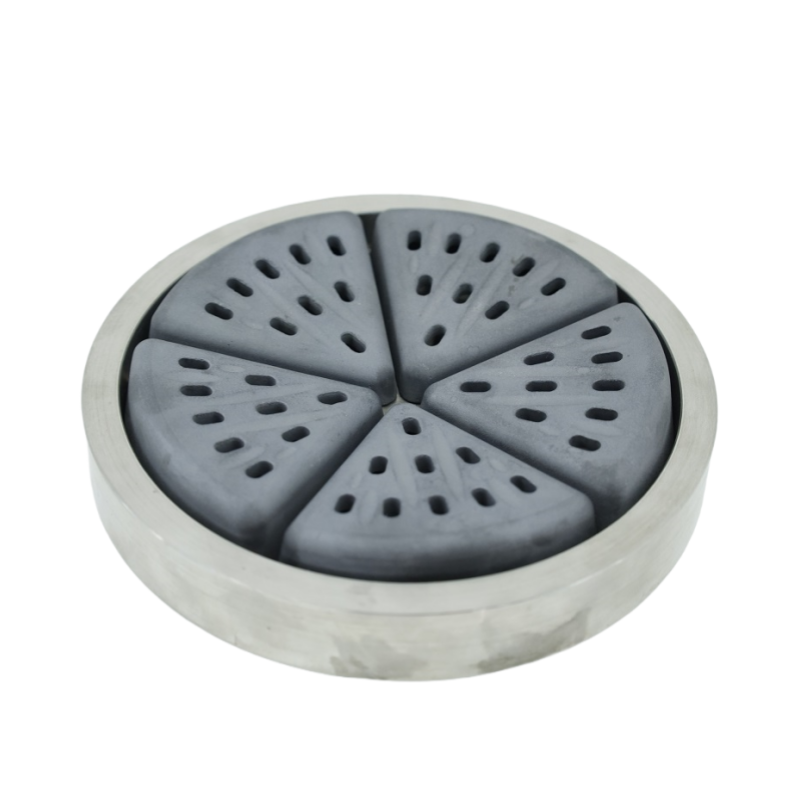
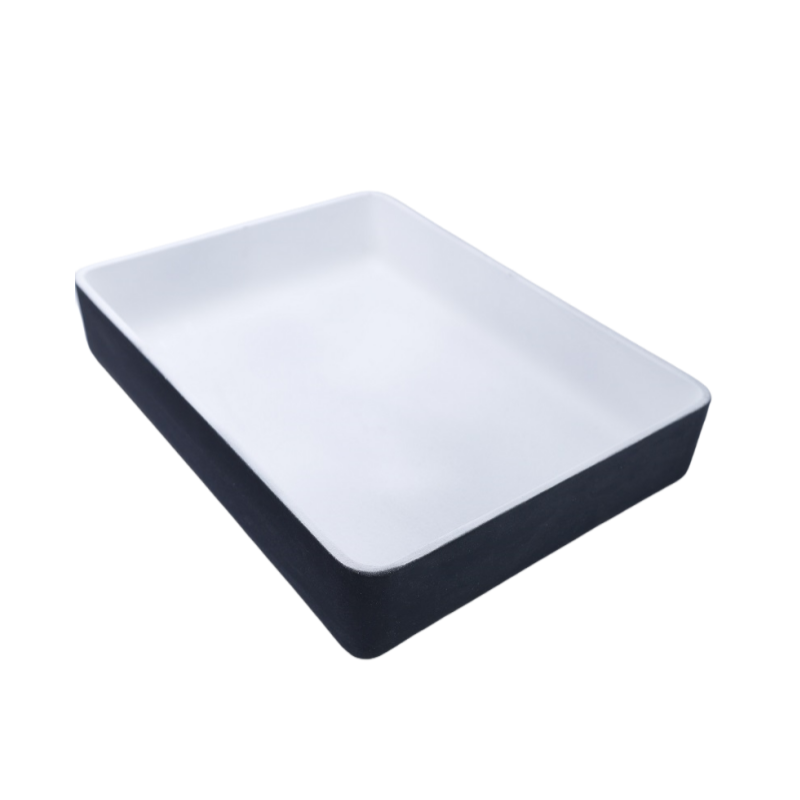
In the world of ceramic materials, form often defines the boundaries of function. While traditional ceramics present themselves in dense, block-like forms, a new structural material featuring regular mesh-like channels is quietly transforming multiple industrial sectors—this is silicon carbide honeycomb ceramics.
What Are Silicon Carbide Honeycomb Ceramics?
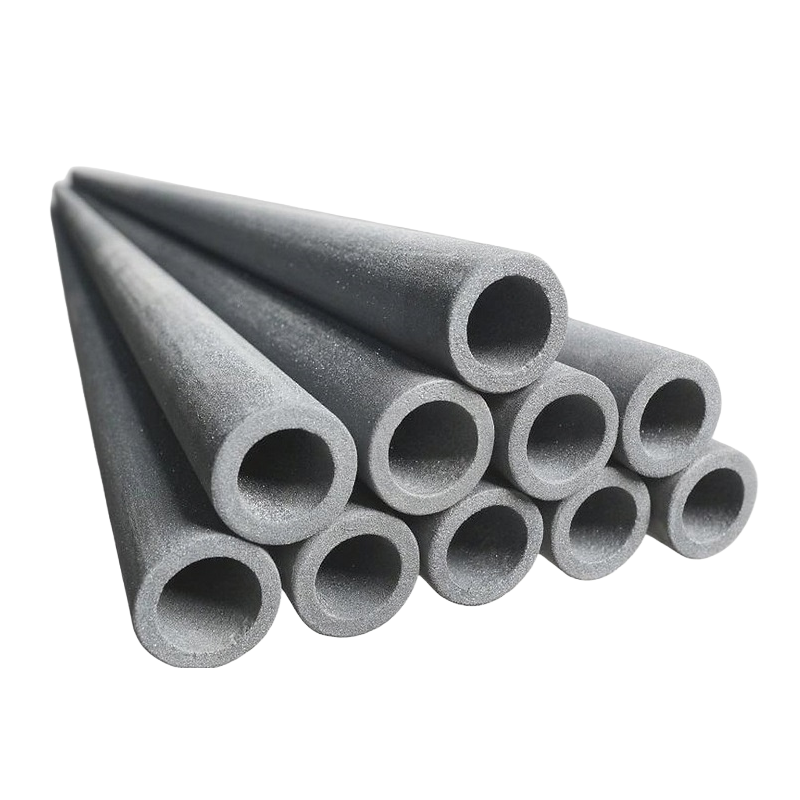
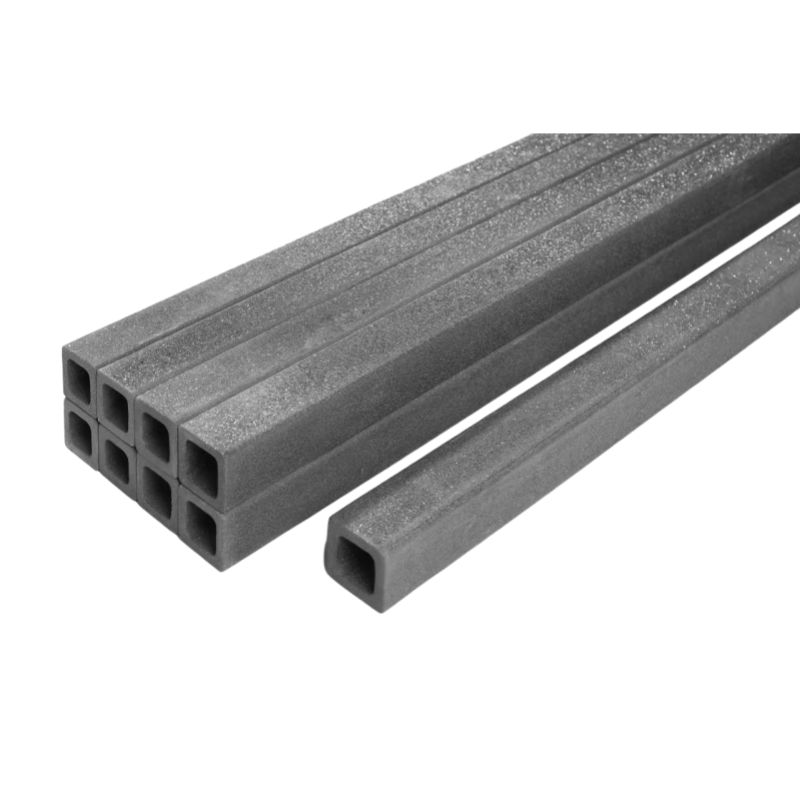
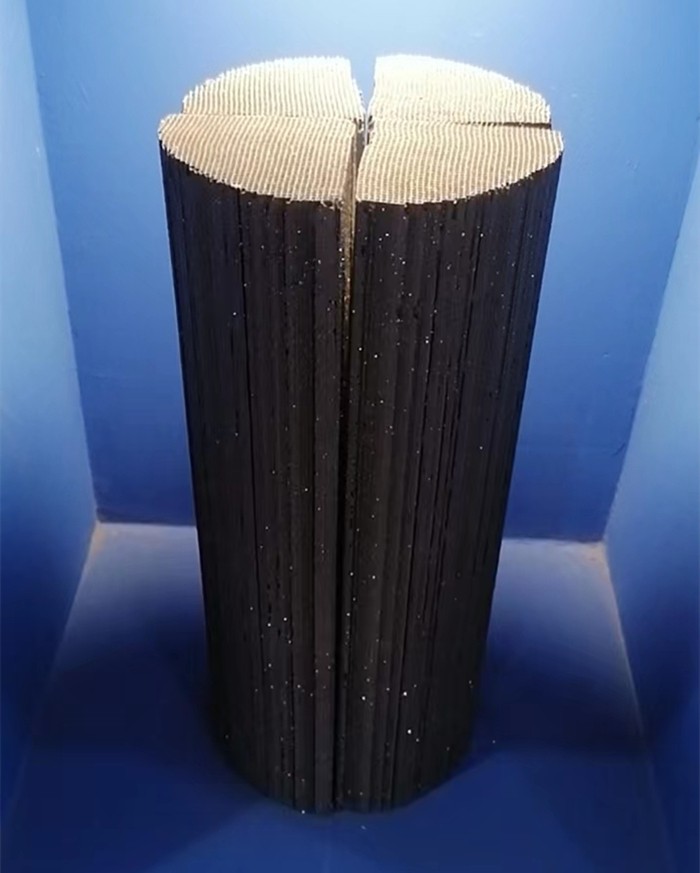
Silicon carbide honeycomb ceramics are novel structural ceramics manufactured with silicon carbide (SiC) as the primary component through specialized forming processes. Their defining characteristic lies in their appearance: countless regularly arranged square or hexagonal channels running through the entire material, creating a structure resembling a honeycomb.
This structure is not designed for aesthetics but serves multiple functional purposes. The high density of parallel channels provides enormous geometric surface area, while the extremely thin channel walls ensure low-resistance fluid flow. With porosity reaching 60-80%, the filtration area per unit volume far exceeds that of other ceramic material forms.
Performance Advantages: The Trinity of High Temperature Resistance, Corrosion Resistance, and Low Expansion
The inherent superiority of silicon carbide material, combined with the enhancement provided by the honeycomb structure, forms the performance barrier of this material:
High-Temperature Stability
At elevated temperatures up to 1600°C, silicon carbide honeycomb ceramics maintain considerable mechanical strength. This means that at temperature ranges where many metals have long softened or melted, it can still function stably as a structural component.
Chemical Corrosion Resistance
When confronted with acidic gases in automobile exhaust or corrosive media in chemical processes, silicon carbide demonstrates remarkable tolerance. The dense protective film of silicon dioxide formed on its surface in high-temperature oxidizing environments ensures long-term service.
Low Thermal Expansion Coefficient
With a thermal expansion coefficient as low as 4.0×10⁻⁶/°C, combined with high geometric surface area design, the material maintains dimensional stability during severe temperature fluctuations and resists cracking from thermal stress.
Optimizable Toughness
Through fiber composite or gradient structure design, the inherent brittleness of silicon carbide honeycomb ceramics is effectively improved, enhancing thermal shock resistance and mechanical reliability for adapting to even more demanding operating conditions.
Core Applications: From Automotive Exhaust to Energy and Environmental Protection
Automotive Exhaust Purification
The most widely recognized application of honeycomb ceramics is as carriers for automotive catalytic converters. The regular parallel channels provide ideal surfaces for catalyst coating while ensuring low-resistance exhaust flow and sufficient contact with the catalyst. Silicon carbide's high thermal conductivity helps rapidly reach the operating temperatures required for catalytic reactions, while its high-temperature resistance withstands peak temperatures during regeneration processes.
Chemical Catalysis
In petrochemical and fine chemical industries, silicon carbide honeycomb ceramics serve as catalyst carriers or structured catalysts for hydrogenation, oxidation, reforming, and other reaction processes. Their regular channel structure ensures uniform reactant distribution, low pressure drop, and high mass transfer efficiency, while corrosion resistance adapts to various acid-base media.
Energy and Environmental Protection
In environmental fields such as flue gas denitrification (SCR) and volatile organic compounds (VOCs) treatment, silicon carbide honeycomb ceramics demonstrate unique advantages as catalyst carriers or filtration media. Their high-temperature resistance and thermal shock properties adapt to frequent start-stop conditions, while high porosity ensures efficient pollutant capture and conversion.
Furthermore, in emerging fields such as molten metal filtration, high-temperature gas purification, and heat storage for solar thermal power generation, silicon carbide honeycomb ceramics are continuously expanding their application boundaries.
Conclusion: Infinite Possibilities Within Regular Channels
The story of silicon carbide honeycomb ceramics is about the perfect combination of structural design and intrinsic material properties. The regularly arranged channels not only create enormous functional surfaces but also provide ideal microenvironments for fluid mass transfer, heat exchange, and catalytic reactions.
From cars speeding on urban roads to continuously operating reactors in chemical plants, to environmental protection equipment in the battle for blue skies, these seemingly ordinary honeycomb-structured ceramics are silently and reliably supporting the efficient and clean operation of modern industry.
And this is merely the tip of the iceberg regarding the application potential of silicon carbide honeycomb ceramics. As preparation technologies continuously advance and application scenarios continue to expand, the infinite possibilities within regular channels are being unlocked one by one.
[Contact us to Inquire or Order] or [Call Our Hotline].
