

With the rapid development of technology, the limitations of traditional silicon-based materials in power electronics, high-frequency communication, and high-temperature applications are becoming increasingly apparent. Against this backdrop, silicon carbide (SiC), with its unique electrical conductivity and physical properties, is rapidly emerging as a new focal point in the semiconductor field.
01 The Mystery of Conductivity Control: How to Harness This Semiconductor?
The conductivity of silicon carbide lies between that of conductors and insulators. This unique semiconductor characteristic primarily stems from its crystal structure and energy band features.
Its wide bandgap structure is the core advantage of silicon carbide—its bandgap width is approximately 3.2 electron volts (eV), almost three times that of traditional silicon material (1.1 eV). This structure means that electrons in silicon carbide require more energy to transition from the valence band to the conduction band. Therefore, pure silicon carbide single crystals exhibit extremely high resistivity at room temperature, reaching 10^8–10^10 Ω·cm, almost equivalent to an insulator.
Precise Control Through Doping: Introducing specific impurities into pure silicon carbide can significantly alter its conductivity. For example:
Nitrogen (N) Doping: Introduces free electrons, forming an N-type semiconductor.
Aluminum (Al) Doping: Introduces holes, forming a P-type semiconductor.
Nitrogen-doped silicon carbide can reduce room-temperature resistivity to the range of 0.01 Ω·cm, achieving conductivity close to that of metals, which is crucial for power device applications.
Unique Temperature Characteristics: Unlike silicon materials, the conductivity of silicon carbide significantly increases with rising temperature. This property allows it to maintain stable operation in high-temperature environments, forming the foundation for its use in extreme conditions.
02 Industry Standard Classification: Different Resistivities Correspond to Different Application Scenarios
The International Electrotechnical Commission (IEC) has established clear classification standards for silicon carbide materials based on resistivity:
| Type | Resistivity Range | Primary Applications |
|---|---|---|
| High-Purity Insulating Type | >10^6 Ω·cm | Special insulating materials, isolation layers |
| Semi-Insulating Type | 10^2–10^6 Ω·cm | High-frequency RF devices, sensor substrates |
| Conductive Type | <10^2 Ω·cm | Power electronic devices |
| - Low-Resistivity Type | 0.01–1 Ω·cm | Power switching devices, diodes |
| - Ultra-Low-Resistivity Type | <0.01 Ω·cm | High-frequency RF front-end devices |
This classification system provides clear guidelines for material selection in different application scenarios and reflects the maturity of silicon carbide material technology.
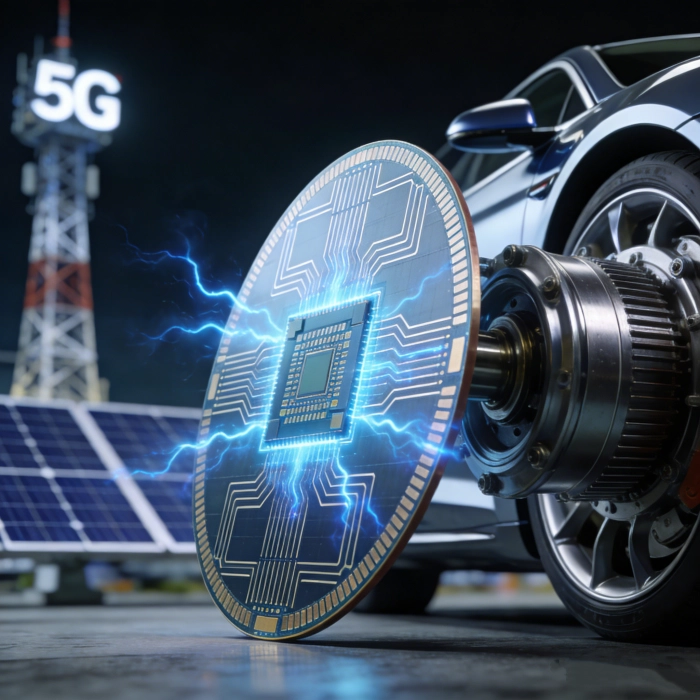
03 Core Application Scenarios: Leading Industrial Transformation in Three Major Fields
New Energy and Power Electronics
In new energy vehicles, silicon carbide technology is fundamentally transforming power system design. Compared to traditional silicon-based IGBTs:
Efficiency Improvement of 3%–5%: Corresponding increase in electric vehicle range.
Volume and Weight Reduction of 20%: Frees up space for batteries and other critical components.
Switching Frequency Increase of 5–10 Times: Significantly reduces the size of passive components.
Tesla’s Model 3 pioneered the use of silicon carbide MOSFETs, demonstrating the commercial feasibility of this technology. Currently, mainstream manufacturers such as BYD and Toyota are also accelerating the adoption of silicon carbide devices.
High-Frequency Communication and 5G Technology
5G base station power amplifiers place extremely high demands on material performance:
High-Frequency Characteristics: The high electron saturation drift velocity of silicon carbide supports higher-frequency operation.
Thermal Advantage: Thermal conductivity is over three times that of silicon, helping to address heat dissipation challenges in base stations.
Power Density: Compared to traditional LDMOS devices, power density can be increased by 2–3 times.
High-Temperature and Extreme Environment Applications
The unique advantages of silicon carbide materials are particularly prominent in high-temperature environments:
Significantly Higher Operating Temperature Limits: Silicon-based materials typically operate below 400°C, while silicon carbide sensors can function stably in environments up to 1500°C.
High-Temperature Stability: Ideal for extreme environment applications such as aircraft engine monitoring and deep-well exploration.
Radiation Resistance: Holds irreplaceable value in space and nuclear industries.
04 Future Outlook: Challenges and Opportunities in Silicon Carbide Technology
Although silicon carbide technology has made significant progress, it still faces several challenges:
Material Cost: The preparation process for silicon carbide substrates is complex, and costs remain higher than those of silicon materials.
Process Maturity: Processing equipment and工艺流程 require further optimization.
Large-Scale Production: How to achieve high-quality, low-defect-rate mass production.
Nevertheless, with continuous technological advancements and growing market demand, the penetration of silicon carbide in the semiconductor field will continue to increase.
Silicon carbide is not only a breakthrough in materials science but also a critical foundation supporting the energy revolution, communication upgrades, and industrial intelligence. From laboratory research to industrial application, this path is fraught with challenges but offers broad prospects—silicon carbide is opening a new chapter in semiconductor technology.
[Contact us to Inquire or Order] or [Call Our Hotline].
