



Have you ever wondered what allows the latest electric vehicles to charge faster and drive longer? What makes our data centers more energy-efficient and improves the efficiency of solar power? A key hero behind these advancements is a "superstar" material in the tech world—Silicon Carbide.
It's often mentioned alongside seemingly complex terms like "third-generation semiconductor" and "wide bandgap." But don't worry! This beginner's guide will explain everything you need to know about this semiconductor "rising star" in an easy-to-understand way.
1. From "Sand" to "Gold": What is Silicon Carbide?
Silicon (Si): The traditional chips and semiconductor devices we're familiar with are mostly based on silicon. Think of it as the "reliable family sedan" of the semiconductor world—proven, ubiquitous, and cost-effective, but it's hitting performance limits in certain extreme conditions.
Silicon Carbide (SiC): This is a compound semiconductor made from silicon and carbon. Think of it as the "high-performance all-terrain vehicle" of the semiconductor world—tougher and more capable, especially designed to operate in "harsh conditions" like high temperatures, high voltages, and high frequencies.
Because its performance surpasses that of first-generation (Silicon, Germanium) and second-generation (Gallium Arsenide, etc.) semiconductors, while having distinctions and overlaps with pure third-generation materials (like Gallium Nitride), the industry affectionately calls it a "Third-Generation Semi" star.
2. The Magic of "Wide Bandgap": Why is Silicon Carbide So Powerful?
All of Silicon Carbide's advantages stem from one core concept: the "Wide Bandgap."
You can think of the "bandgap" as the "energy hurdle" an electron needs to overcome to jump from being "at rest" (insulating) to "running free" (conducting).
Silicon has a low hurdle: Electrons can start running easily, but they can also get "out of control" easily with a little disturbance (like heat), causing the device's performance to drop or even fail.
Silicon Carbide has a high hurdle: Electrons need more energy to get activated. This means:
High Voltage Resistance: It can withstand much higher voltages without breaking down, making it ideal for high-power environments.
High Temperature Resistance: It can operate stably at temperatures of 200°C and even higher, simplifying cooling systems.
High-Frequency Operation: Electrons can move faster, allowing for higher switching speeds. This enables electrical equipment to be made smaller and more efficient.
Low Energy Loss: Electrons encounter less "resistance" when moving, resulting in lower energy loss and greater power efficiency.
3. In Action: Silicon Carbide's Star Applications
So, where is Silicon Carbide actually used?
Revolutionizing the "Heart" of EVs
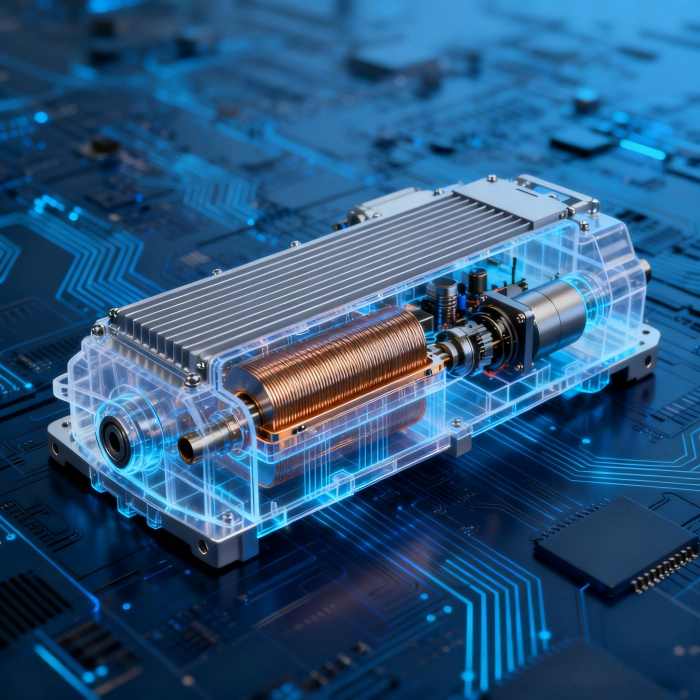
Main Traction Inverter: This is the "heart" of an EV, converting DC power from the battery into AC power to drive the motor. Using SiC components significantly reduces energy loss during this conversion, thereby increasing range by about 5-10%, or allowing for a smaller, cheaper battery pack.
On-Board Charger (OBC): Enables faster charging speeds, making "charging for 5 minutes, driving 100 km" a possibility.
DC-DC Converter: Makes power conversion units smaller, lighter, and more efficient.
The "Efficiency Manager" for Green Energy
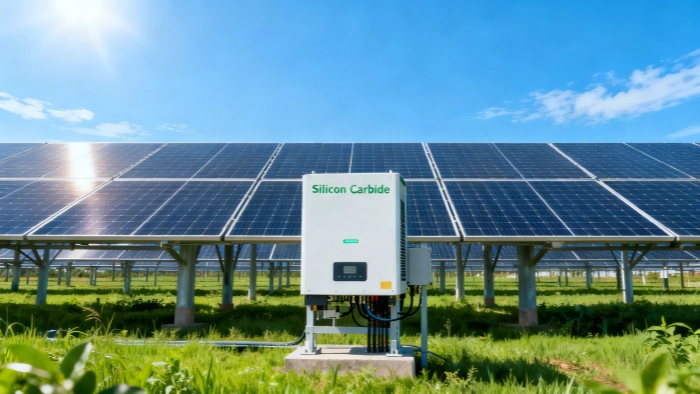
PV Inverters: In solar power generation, SiC reduces energy loss from the solar panels to the grid, boosting overall generation efficiency.
Energy Storage Systems (ESS): Increases the charge/discharge efficiency of storage power stations, ensuring every kilowatt-hour of electricity is used to its fullest.
The "Energy-Saving Pioneer" for Industry & Telecom
Industrial Motor Drives: A massive portion of global industrial electricity is consumed by motors. SiC-based variable frequency drives can significantly reduce their energy consumption.
5G Base Station Power Supplies: Provides more efficient and compact power solutions for high-power 5G equipment.
4. Challenges and The Future
Of course, this "star" isn't perfect. Currently, the main challenge for Silicon Carbide is cost—it's still more expensive than traditional silicon components. However, with technological advancements and expanding production capacity, its cost is falling rapidly, making it increasingly cost-effective.
Looking ahead, as electric vehicles become ubiquitous and carbon neutrality goals advance, the stage for Silicon Carbide will undoubtedly expand. It is joining forces with another third-generation semiconductor star, Gallium Nitride (GaN), to pioneer a more efficient and energy-saving electrified future.
In a Nutshell
Simply put, Silicon Carbide is:
A higher-performance semiconductor material (wide bandgap).
It makes our electronics, especially EVs and green energy equipment, more energy-efficient, higher-performing, and more compact.
It is a crucial, indispensable material in the current upgrade of the tech industry, particularly in the energy revolution.
Now, when you hear the name "Silicon Carbide" again, do you have a clearer picture of this "Third-Generation Semi" star? It's no longer just a cold technical term, but a fundamental building block paving the way to a more efficient and greener future.
[Contact us to Inquire or Order] or [Call Our Hotline].
