

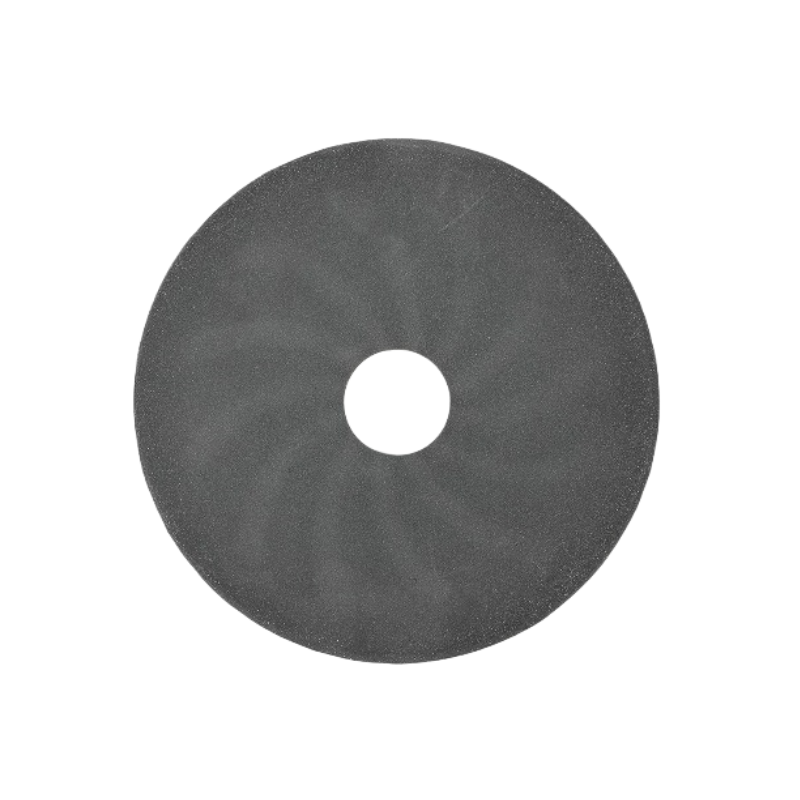
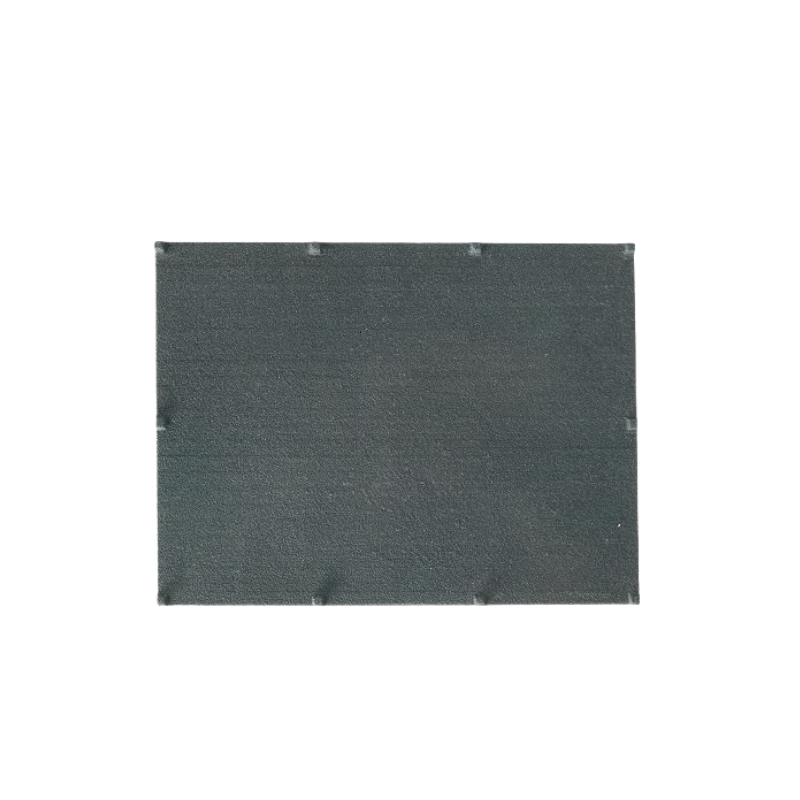
In modern precision manufacturing and materials science, the quality of grinding processes directly affects the performance of final products. Traditional grinding media such as alumina balls and zirconia balls are increasingly inadequate to meet the growing demands for high purity, high efficiency, and high precision. Silicon carbide grinding balls—a new type of ceramic grinding medium hailed as the "black gemstone of the grinding field"—are leading a revolution in grinding technology with their exceptional performance.
Why Are Silicon Carbide Grinding Balls Highly Sought After?
1. Unparalleled Hardness and Wear Resistance
Silicon carbide grinding balls boast a Mohs hardness of 9.2–9.3, second only to diamond. This extreme hardness translates to:
Exceptionally low self-wear: Minimal generation of debris during prolonged grinding.
Extended service life: Wear resistance is 3–5 times higher than zirconia balls and 5–8 times higher than alumina balls.
High purity: Prevents contamination of materials from media wear, making them ideal for processing high-purity substances.
2. Excellent Thermal Stability and Chemical Inertness
Silicon carbide materials perform exceptionally well in high-temperature and corrosive environments:
High-temperature resistance: Maintains stable performance at up to 1650°C.
Corrosion resistance: Resists acid and alkali corrosion, suitable for harsh chemical environments.
Chemical stability: No leaching of metal ions (Fe <5ppm, Na/K <1ppm).
3. High-Efficiency Grinding Capability
High-density design: Bulk density exceeds 3.1 g/cm³, delivering greater impact energy.
Improved grinding efficiency: 30–50% more efficient than traditional grinding balls.
Uniform particle size: Produces evenly distributed ultrafine powders.
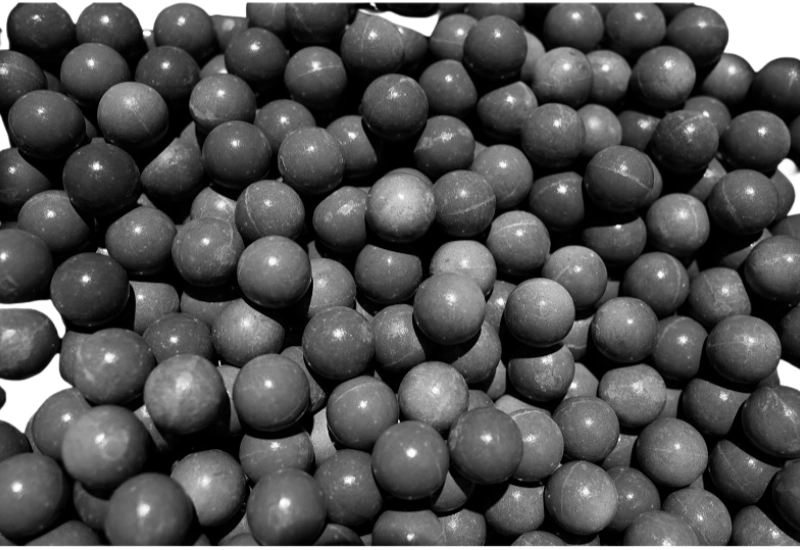 Selection Guide for Silicon Carbide Grinding Balls
Different types of silicon carbide grinding balls are available to meet specific application needs:
| Type | Characteristics | Suitable Applications |
|---|---|---|
| RSiC | SiC content ≥99%, porosity <17% | Scenarios requiring extremely high purity |
| NSiC | SiC content 75%, Si₃N₄ content ≥25% | Applications needing good mechanical strength and corrosion resistance |
| RBSiC | SiC content ≥90%, Si content 5%–10% | Cost-effective general applications |
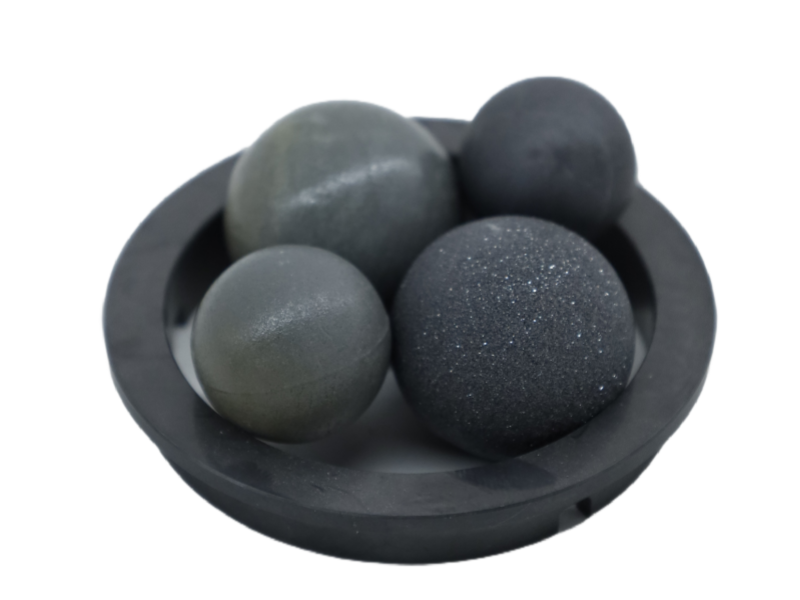 Application Fields: Ubiquitous High-Efficiency Grinding
1.Electronic Materials
In the ultrafine grinding of lithium battery cathode/anode materials, electronic ceramics, and magnetic materials, silicon carbide grinding balls ensure material purity, prevent metal contamination, and significantly enhance battery performance and electronic product reliability.
2.Chemical and Pharmaceutical Industries
When grinding pharmaceuticals and fine chemical products, chemical inertness prevents product contamination, while high hardness ensures grinding efficiency and product quality.
3.Advanced Ceramics Preparation
Used in the processing of raw materials for structural and functional ceramics, they provide uniformly fine powders, improving sintering performance and final product properties.
4.Metal Powder Preparation
In the production of high-performance alloy powders and cemented carbide materials, they enable efficient grinding and improve powder flowability and formability.
Detailed Technical Parameters
The outstanding performance of silicon carbide grinding balls stems from their excellent physical and chemical properties:
High thermal conductivity: 36 W/m·K at 1200°C, facilitating rapid heat dissipation.
Low thermal expansion coefficient: Only 4.6×10⁻⁶/℃, ensuring excellent thermal stability.
High mechanical strength: Room temperature strength of 90–100 MPa, with strength increasing rather than decreasing at 1300°C.
Fracture toughness: 2.0 MPa·m¹/², providing good impact resistance.
Economic Benefit Analysis
Although the initial investment in silicon carbide grinding balls is relatively high, their long-term economic benefits are significant:
Extended service life: Lower replacement frequency reduces downtime.
Reduced energy consumption: Higher grinding efficiency shortens processing time and saves energy.
Higher product yield: Minimizes contamination, improving product consistency and quality.
Lower maintenance costs: Almost no wear reduces maintenance requirements.
Future Development Trends
With the rapid development of high-end industries such as new materials, new energy, and electronics, the application prospects for silicon carbide grinding balls are broad:
Nanoscale grinding: Meets the extreme precision requirements for nanomaterial preparation.
Intelligent matching: Develops specialized grinding ball formulations tailored to different material properties.
Green manufacturing: Supports environmentally friendly, low-energy production processes.
Customized services: Provides tailored grinding solutions based on specific customer needs.
Conclusion
Silicon carbide grinding balls are more than just grinding media; they are a vital force driving the advancement of high-end manufacturing and materials science. They represent the shift in grinding technology from "rough" to "precision" and from "general-purpose" to "specialized." As technology advances and industries upgrade, silicon carbide grinding balls will undoubtedly demonstrate their unique value in more fields, providing robust support for the high-quality development of manufacturing.
For production enterprises pursuing high quality, efficiency, and purity, choosing the right silicon carbide grinding balls is not only an effective way to enhance product competitiveness but also a significant step toward intelligent and green manufacturing. In an era where materials determine performance, let silicon carbide grinding balls become your reliable partner in process upgrading.
[Contact us to Inquire or Order] or [Call Our Hotline].
